
FAST Has a Credibility Problem. Who's to Blame is Up for Debate
Measurement? Data-hoarding? An over-supply?

During a presentation at this week’s StreamTV show in Denver, Co, an executive from Luminate research laid out a list of the top streaming shows of 2026 thus far, which including HBO Max’s “The Pitt,” Netflix’s “The Night Manager” and multiple Paramount+ shows from the Taylor Sheridan Universe.
Left off the list was “Nash Bridges,” which has its very own channel on the LG FAST lineup - number 374. Also not mentioned was “Untold Stories From the ER,” which ran for 15 seasons on TLC starting in 2004, and is now a signature of one of the 150-plus FASTs from Radial Entertainment.
That’s despite “Untold Stories” generating over 100 million viewing hours last year - at least according to Radial’s Chief Revenue Officer Brendon Thomas.
You’d think some third party researcher would be able to pick up on and validate that 100 million hour number, or any sense of how many “Nash” fans are tuning in a regular basis. Or that distributors like an LG or Samsung or Roku would be crowing about such numbers. But instead, you have an odd media sector, which on one level would appear to be booming - there are 1,700 FASTs by some estimates (The New York Post just launched one) - yet in reality, faces both a credibility crisis and a related economic downturn.
The odd state of affairs has set up a media and advertising quandary. If you stop by the various NewFronts hosted by the likes of Samsung and LG, you hear all about how many millions of viewers are choosing their FAST lineups (Samsung recently sent me a report on the space with the laughable subject head “FAST is the new default”).
Yet if you look at the Nielsen Gauge report, the FAST lineups from the major TV makers never show up in the data - because they are too small to even capture a single percentage of TV time. It’s true that free services such as Tubi, The Roku Channel and Pluto do register via The Gauge - those are well-branded aggregators of huge free TV lineups. True FAST channels, such as Radial’s Hong Kong Fight Club, may as well not exist according to Nielsen, or the likes of VideoAmp, Samba TV, iSpot or others.
And right now, the result is an overstuffed market with little third party validation, and sinking value among brands. Who to blame is a question that was much debated in the halls of StreamTV.

Dave Bernath, CEO of Wurl - an ad tech company that helps power many FASTs, didn’t mince words during his StreamTV keynote. “The challenge isn’t audience demand,” he said. “It’s the economics.” He said that one FAST provider told him that its revenue per hour had slid from 18 cents a few years ago to 8 cents today.
Is this simply a product of too much supply? Or an industry doing this to itself? Bernath relayed a story about a TV platform provider know for hoarding its data from FAST channel players “to kneecap the content companies in negotiating renewals.” Bernath strongly advocated for more transparency - which may be a long time coming.
One independent FAST executive told me about a meeting at StreamTV with a major distributor, which to date had only delivered broad revenue and viewership information - nothing about audience sizes or popular individual shows. “They showed us a printout of some data, and wouldn’t let us keep it,” he said. “My boss had to sneak and take a picture with her phone.”
That lording over data may help in negotiating distribution deals - but is likely hurting the overall ad market. Imagine cable providers refusing to let Nielsen monitor TV ratings back in the industry’s heyday.
Rob Caruso, vp of Consumer Products at The Trade Desk, likened the current situation for brands to buying national TV through local cable.
“Right now, we have more of a frenemy model [in FAST] with these win-lose dynamics,” he said. “Advertisers are not fully served.”
As a result, “a lot of our customers are hurting,” said Srinivasan KA, Director and President, global Business at Amagi. “CPMs going down.”
One FAST provider told me that a few years ago, his company was getting $30 CPMs. Today, it’s closer to a few dollars.
Part of that is likely due to an over abundance of inventory. But according to some FAST execs, it seems as though the entire industry’s attitude toward transparency is holding it back.
Kathi Chandler-Payatt, Head of Acquisitions, LG Channels, told me during a panel at StreamTV that in her previous role as a distributor, “we ask for tons of data,” she said. “Their policy was always no.”
“And now, on this side, we also do not give data.”
“There is so much supply,” said Evan Bregman, General Manager, Streaming & DTC Tastemade. “Demand is catching up but it’s gonna take a while. [Unfortunately] structural limitations are hold back the ability for more investment coming into this space. Barriers need to be broken down. We are leaving money on the table collectively.”
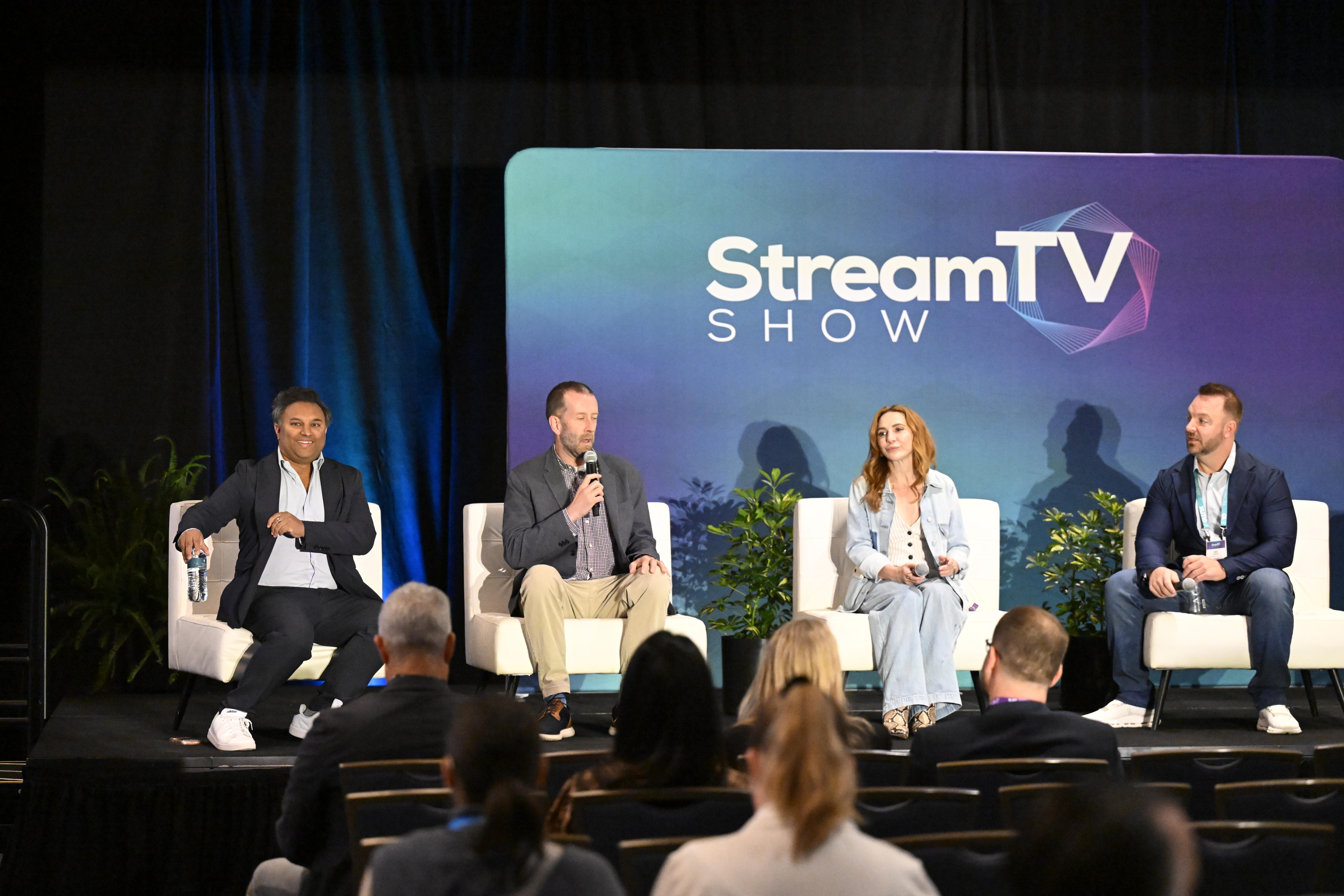
Yet it seems fair to ask - are there structural limitations - or an overestimation of the appetite for FAST. After all, Nielsen and others could measure many of these channels - if they were allowed to do so.
If the audiences were so great, wouldn’t most channels or platforms be happy for third-party validation? It’s hard not to be somewhat suspicious, especially when you hear complaints about platforms like Samsung pushing people toward their FAST lineups.
Yet would the BBC and NBCU and others be putting so much investment into a sector that is the long tail of TV if there weren’t signs of life (and future dollars)?
It’s not that Nielsen and others can’t measure the audiences for these FAST channels. It’s more that the platforms don’t want to let Nielsen in - either for cost reasons, or fear or exposure.
“Nielsen trends show the FAST segment offers a great opportunity for studios, platforms and media companies,” said Brian Fuhrer, SVP, Product Strategy & Thought Leadership, Nielsen. “The increasing consumer appetite also presents agencies and advertisers with an important avenue to connect with them as viewing shifts. We continue to build momentum in FAST channel measurement and look forward to working with more channel owners to do so.”
What this amorphous state of affairs creates is doubt, or even suspicion among brands and media buyers that FAST is subpar. “There is a huge gap between how FAST is perceived by agencies and buyers,” said Amagi’s KA. “We need to do a lot more education.”
The need for education was a common theme among executives touting FAST at StreamTV. Several top media company leaders spoke almost as if they were getting a raw deal.
“We really think it’s a premium experience,” said Trina Pepe, Senior Vice President, FAST and AVOD Growth Strategy, AMC Global Media - but many brands see it as junk.
Well, as Radial’s Thomas put it, “Education begins with data.”
The question is whether that data ever gets to where it needs to go. Otherwise the only data that will matters will be revenue generated per hour - which is going down - FAST.
Great post. The lack of FAST data is a huge blind spot in TV - perhaps the biggest
CTV is becoming a lemon market just like programmatic. The only way to reverse the trend is if buyers start to value Media Quality as a contributor to true short AND long-term effectiveness.